
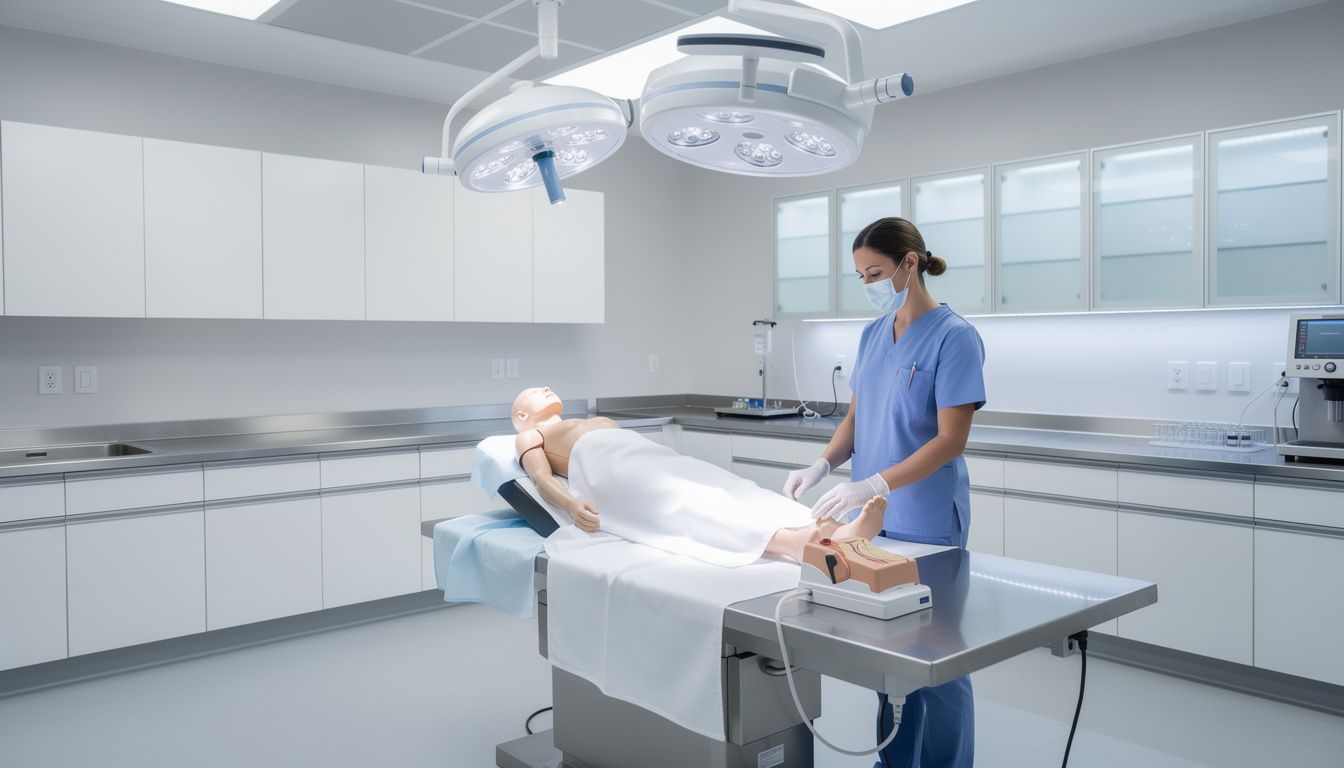
What Is the Difference Between High-Fidelity and Low-Fidelity Surgical Simulators?
The question of high-fidelity vs low-fidelity surgical simulators sits at the center of most decisions about choosing the right training tool for a surgical program. A surgical training tool is any device or model built to reproduce part of the operative experience, and the range of options now available functions as a core training modality across medical schools and residency programs. Surgical simulation training spans everything from a foam pad used for suturing practice to a computerized system that reproduces bleeding and tissue deformation in real time.
The level of fidelity of a given device is not a single number. It reflects three separate dimensions: physical realism, functional realism, and psychological realism. A model can score high on one dimension and low on another, which is why surgical simulator fidelity should be matched to a defined learning objective rather than treated as a hierarchy where more expensive automatically means better.
Understanding physical, functional, and psychological fidelity
Physical fidelity describes how closely a model's texture, color, and resistance mimic human tissue. Functional fidelity describes how the device responds when an instrument cuts, grasps, or retracts it, and whether that feedback matches what a surgeon would feel in the operating room. Psychological fidelity refers to the emotional and cognitive pressure a trainee experiences, such as time constraints or simulated complications that force real decision-making. A device can achieve strong physical fidelity while offering almost no functional or psychological realism at all.
High visual resemblance does not automatically translate into better skill acquisition. Programs sometimes invest in visually striking mannequins that add little to early motor learning, since a trainee developing basic hand-eye coordination or suture spacing needs consistent repetition more than lifelike skin tone. Basic physical structures are frequently sufficient for building muscle memory, which is why fidelity choices should follow the skill being taught rather than the budget available for equipment.
Can Low-Fidelity Simulators Teach Surgical Skills Effectively?
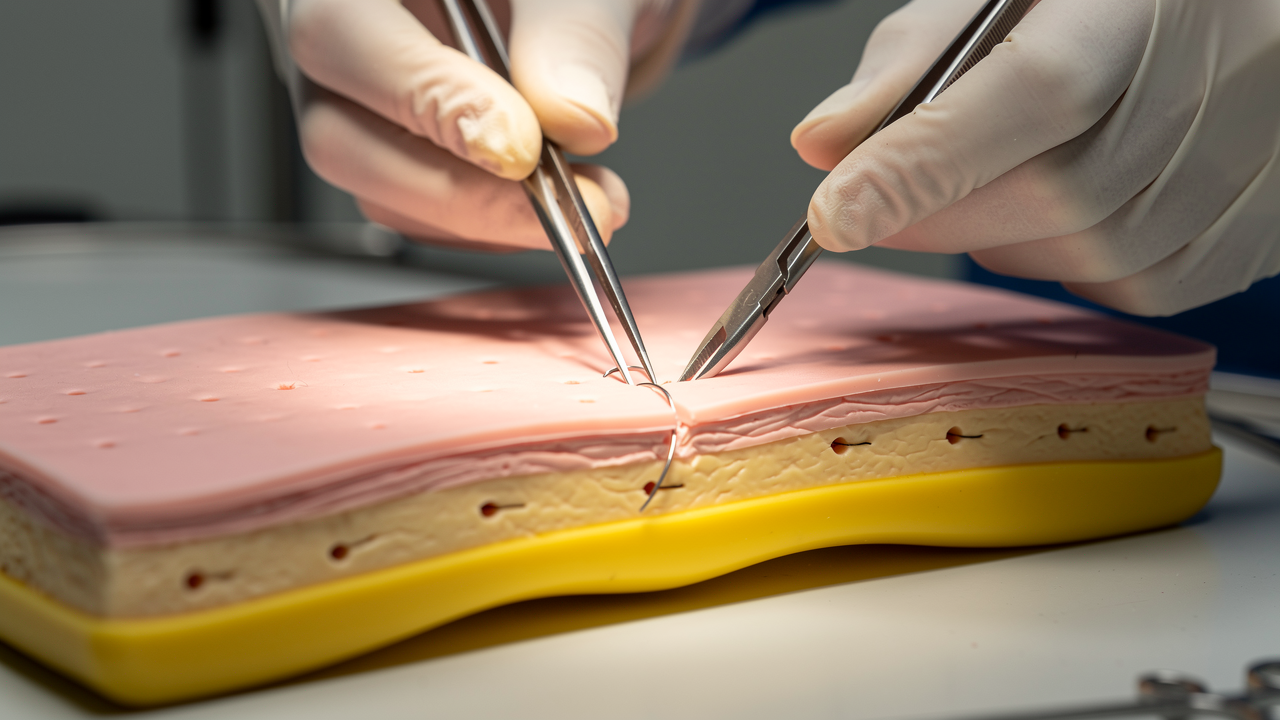
Low-fidelity simulation remains effective for teaching core technical skills and basic motor coordination, especially in the early phase of surgical education where repetition matters more than realism. A bench model, a box trainer, or a simple task trainer costs a fraction of a computerized system, which allows a program to place several stations in one room instead of scheduling limited time on a single expensive device. That accessibility affects how much practice a student actually gets before moving toward supervised patient care.
A literature review addressing simulator fidelity in procedure skill training found that low-fidelity models were not inferior to higher-fidelity devices for many basic motor tasks, which supports keeping early training deliberately simple rather than technologically advanced. Devices such as a box trainer or bench model support technical skills training at the stage when a learner is still building fundamental mechanics, including instrument handling and consistent needle angles.
Deliberate practice in surgery depends on repeated attempts at a narrow skill with immediate feedback, and a simple task trainer lowers the cognitive hurdles that would otherwise slow a novice down. Suture patterns, knot tying, and basic instrument grasping remain common exercises because each isolates a single mechanical skill. Repetitive training on inexpensive models builds automaticity, and because these kits cost little, many programs let trainees take a basic kit home, extending self-directed practice in simulation-based surgical education well beyond scheduled lab hours.
High-Fidelity Simulation Suits Complex Procedures and Rare Complications
High-fidelity simulation earns its cost when the learning objective goes beyond isolated motor skills. Training programs turn to high-fidelity surgical simulation training when residents need to rehearse a full procedural sequence, respond to an unexpected complication, or coordinate communication among a full operating team under pressure. In these scenarios, a bench model cannot substitute for a system built around procedural simulation and tissue handling simulation, because the training goal is judgment under complexity rather than repetition of a single motion.
Procedural rehearsal on an immersive simulation platform lets a resident encounter a rare clinical pathology, such as variant anatomy or an unusual bleed, without risk to a patient. Haptic feedback in these systems allows an advanced trainee to feel the difference between healthy tissue and a diseased or scarred structure, which shapes decisions about force and instrument angle during the procedure.
Managing cognitive load and tissue handling
High-fidelity environments are best suited to intermediate and advanced learners who already have basic mechanics in place and can absorb complex clinical cues without becoming overwhelmed. Simulating the noise, time pressure, and interruptions of an actual operating room improves decision-making under stress, since the trainee practices filtering relevant information from distraction rather than encountering that challenge for the first time during a real case. On the tissue side, realistic synthetic interfaces are engineered with layered materials that mimic vascular resistance and tissue compromise, letting advanced residents feel resistance change as they progress through a dissection plane.
Does Simulator Fidelity Improve Skill Transfer to Real Surgery?
Surgical skills transfer describes how well an ability practiced on a simulator carries over into an actual operation, and the evidence on this point is more nuanced than the marketing around advanced equipment suggests. Higher simulator realism can improve confidence and procedural flow for delicate, high-stakes procedures, but transfer to the operating room depends more on structured instruction, feedback, and objective assessment than on physical realism by itself.
Dry lab training, meaning practice on non-living, bench-based models, prepares trainees for the mechanical parts of an operative task, and a realistic surgical model can help bridge the gap for genuinely delicate maneuvers such as microsurgical anastomosis. For standard basic skills, though, the added realism offers only marginal value. A meta-analysis examining simulator resemblance in basic skill acquisition found no significant advantage of high-resemblance simulators over simpler ones for entry-level trainees, reinforcing that instructional design matters more than surface realism at that stage.
Objective assessment tools such as the Objective Structured Assessment of Technical Skill provide the actual measurement of whether a simulated skill translates into the operating room, rather than relying on how convincing a model looks. Programs that integrate a structured curriculum, moving trainees from benchtop practice to supervised clinical implementation in defined steps, show better skill conservation over months than programs that rely on simulator exposure alone. A blended pathway, pairing dry lab repetition with graded clinical supervision, tends to be more efficient than either method used on its own.
Choosing the Right Simulator Is a Matter of Learner Stage, Not Budget Alone
Resident surgical education programs build a simulation curriculum around the specific objective at each stage, matching a device's physical fidelity to how experienced the learner already is. Competency-based training reinforces this approach, since progression depends on demonstrated performance rather than a fixed number of hours in the lab. A junior resident practicing suturing gains little from a highly complex system, while a senior resident preparing for an uncommon procedure needs more than a static bench model.
| Learner Stage | Skill Phase | Recommended Simulation Type |
|---|---|---|
| Novice / early resident | Basic motor coordination | Bench model, box trainer, simple task trainer |
| Intermediate resident | Procedural sequencing | Mid-fidelity synthetic models with functional feedback |
| Advanced resident / fellow | Complication management, rare pathology | High-fidelity simulators with haptic feedback |
| Postgraduate / specialist | Spatial anatomy, approach planning | Cadaveric or tissue-based training |
Aligning a simulator's output metrics with board certification requirements avoids a common mistake seen in equipment purchasing: adopting a device because it looks advanced without confirming it actually measures the specific competencies a certifying body expects.
You are welcome to visit the attached link and see for yourself: biotechanatomy.co.il.
An expensive computerized system that sits idle most weeks delivers less real training value than a lower-cost task model used daily by multiple residents. Utilization rate, not sticker price, is a more honest measure of return on a simulation investment. Maintenance contracts and the replacement of consumable parts, such as synthetic skin, suture pads, and disposable tissue inserts, affect the true cost of ownership, and programs that overlook these recurring costs often underestimate their annual simulation budget.
Anatomy Lab Training Adds a Layer of Realism Synthetic Models Cannot Match
Anatomy lab training built around human tissue provides a level of anatomical realism, tissue resistance, and spatial relationship between structures that synthetic devices still cannot fully reproduce. For advanced surgical instruction, hands-on surgical education using real tissue closes gaps that remain even after a resident has mastered synthetic task trainers and high-fidelity mannequins. Realistic anatomy training of this kind is generally reserved for postgraduate stages, when the learning objective shifts from isolated technique to full procedural and anatomical judgment.
A systematic review of cadaveric simulation in postgraduate education supports this positioning, noting consistent contributions to procedural competence and spatial depth accuracy that synthetic task devices do not replicate on their own.
Organic tissue offers haptic fidelity that synthetic materials approximate but do not equal, particularly during micro-dissection where subtle differences in fascia and vessel wall matter. Cadaver-based sessions are also used for team-based training and for practicing surgical approaches and entry points, since the spatial layout of a real body cannot be fully scripted into a synthetic model. High-fidelity synthetic models can substitute for or complement organic tissue training when resource limits restrict access to a lab, and a structured curriculum that integrates both formats tends to make the most of limited cadaveric course time.
Is a more expensive simulator always the better training choice?
No. Cost and fidelity should follow the learning objective. A junior trainee learning basic motor skills often gains more from an inexpensive task trainer than from a computerized system, while an advanced resident preparing for complex procedures benefits from higher-fidelity equipment.
Do low-fidelity models slow down skill development?
Evidence reviewed through PubMed Central indicates low-fidelity models are not inferior for basic motor tasks. They can be more effective in early training because they allow high repetition without adding unnecessary complexity.
How does anatomy lab training differ from synthetic simulation?
Anatomy lab training uses human tissue, offering resistance, texture, and spatial relationships that synthetic models can only approximate. It is generally used at postgraduate stages once basic technical skills are already established.
What should guide a program's choice between task trainers and high-fidelity systems?
The learner's stage and the specific skill being taught should guide the choice, along with practical factors such as equipment utilization, maintenance costs, and how the device's output aligns with certification requirements.
About the Business
Biotech Anatomy LTD operates a state-of-the-art facility focused on practical anatomy and surgical education, combining cadaver-based training with research and development services. The organization works with surgeons, medical students, healthcare professionals, researchers, and medical device development companies, positioning itself as a bridge between medical education and technological innovation in the design of complex tissue-simulating training systems. Its work supports clinical institutions, device developers, and specialty surgical boards seeking realistic preparation that advances patient safety through structured, hands-on training.
